
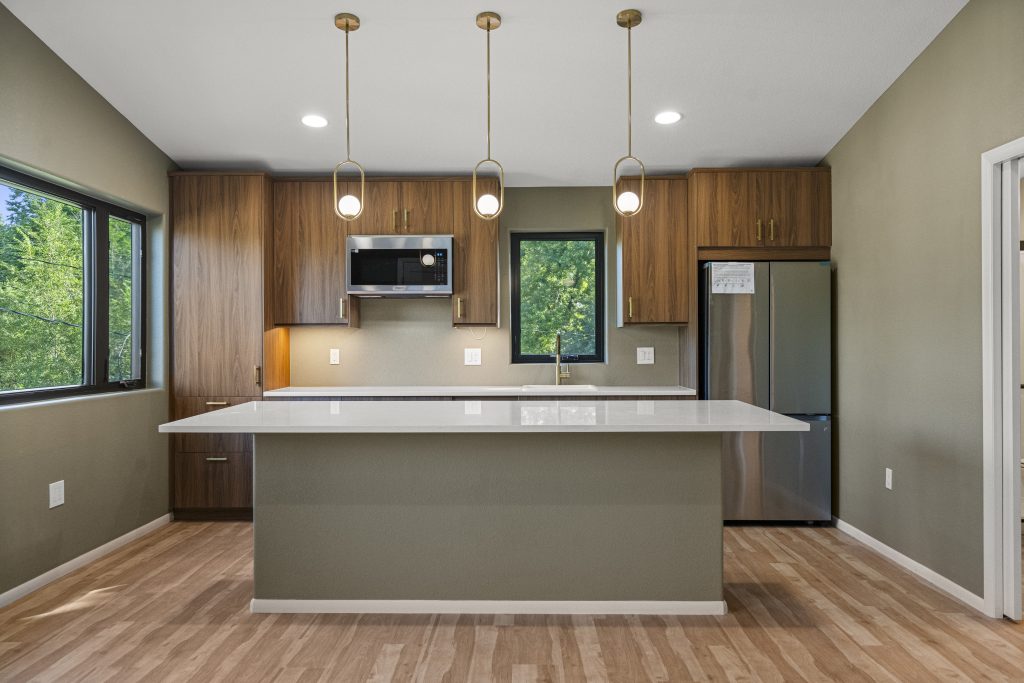
Your kitchen countertops are the unsung heroes of daily life — the stage for chopping, cooking, and gathering. Yet even when you’re shopping for the best kitchen countertop options, one wrong move can turn these surfaces from sleek and stylish to scratched, stained, and stressed. In this guide, we break down the five most common mistakes homeowners make, the real damage they cause, and exactly how to fix them so your counters stay beautiful for decades.
Table of Contents
Skipping the Kitchen Countertop Thickness Guide
Too many renovators choose countertops purely by color or price, completely ignoring the kitchen countertop thickness guide. They assume “thinner is fine” or let the fabricator decide without asking questions.
The effect: Countertops that are too thin sag under the weight of heavy appliances, crack along seams, or feel cheap and unstable when you lean on them. In high-traffic kitchens, this mistake can lead to full replacement within just a few years.
The correct way: Always consult the kitchen countertop thickness guide before you buy. Standard 1¼-inch (3 cm) slabs work for most homes, but islands and high-use areas often need 1½-inch (4 cm) or even 2-inch material for strength and that premium look. Pair the right thickness with proper support brackets and you’ll never worry about flexing again.
Ignoring the Kitchen Countertop Sealing Process
Homeowners with granite, marble, or quartzite often skip professional sealing after installation or forget to re-seal on schedule, treating the kitchen countertop sealing process like an optional extra.
The effect: Porous stone absorbs oil, wine, and coffee instantly, leaving dark permanent stains. Bacteria build up in microscopic pores, and the surface dulls within months instead of shining for years.
The correct way: Make the kitchen countertop sealing process part of your renovation checklist. Have the fabricator apply a high-quality penetrating sealer at installation, then re-seal every 6–12 months (or test with a water-drop method). It takes ten minutes and saves thousands in future repairs.
Neglecting Kitchen Countertop Maintenance Tips (Especially Butcher Block Kitchen Countertop Care)
People buy beautiful counters and then treat them like indestructible lab tables — using bleach, steel wool, or letting spills sit overnight. They completely forget tailored kitchen countertop maintenance tips, including proper butcher block kitchen countertop care.
The effect: Laminate chips, stone etches, and wood butcher block dries out, cracks, and harbors germs. Your once-gorgeous surface turns dull, rough, and unhygienic in under a year.
The correct way: Follow simple kitchen countertop maintenance tips daily: wipe spills immediately with a soft cloth and mild soap. For wood, schedule monthly butcher block kitchen countertop care — apply food-grade mineral oil or a specialized conditioner to keep it hydrated and bacteria-resistant. Never let water pool on any surface, and you’ll preserve that showroom shine.
Choosing Countertops Without Considering Heat Resistant Kitchen Countertop Types
Style-over-function buyers pick trendy materials that look great in photos but can’t handle real cooking. They ignore heat resistant kitchen countertop types entirely.
The effect: One forgotten hot pan or baking dish leaves scorch marks, warping, or cracking. The damage isn’t just ugly — it permanently weakens the material and shortens the countertop’s lifespan dramatically.
The correct way: Always select heat resistant kitchen countertop types such as granite, quartz, or porcelain. These materials laugh at 400°F (200°C) temps straight from the oven. If you love the look of marble or butcher block, use trivets religiously, but for worry-free cooking, heat-resistant options are non-negotiable.
Overlooking Scratch Resistant Kitchen Countertop Options and Eco Friendly Kitchen Countertop Choices
Budget shoppers grab the cheapest slab available without checking durability or sustainability, ignoring both scratch resistant kitchen countertop options and eco friendly kitchen countertop choices.
The effect: Knives, keys, and even ceramic plates leave deep scratches that can’t be buffed out. The material off-gasses harmful chemicals or comes from unsustainable sources, and within a few years you’re calling kitchen countertop replacement services again — wasting money and adding to landfill waste.
The correct way: Invest in scratch resistant kitchen countertop options like quartz or sintered stone, and pair them with eco friendly kitchen countertop choices made from recycled glass, reclaimed wood, or low-VOC materials. When damage does occur despite your best efforts, hire reputable kitchen countertop replacement services instead of attempting a DIY fix that usually makes things worse.
Final Thoughts: Protect Your Investment
Your countertops don’t have to become the most expensive regret in your kitchen. By avoiding these five mistakes — following the kitchen countertop thickness guide, committing to the kitchen countertop sealing process, sticking to kitchen countertop maintenance tips (and butcher block kitchen countertop care), choosing heat resistant kitchen countertop types, and prioritizing scratch resistant kitchen countertop options plus eco friendly kitchen countertop choices — you’ll enjoy counters that look as good in ten years as they do on day one.
Ready to give your kitchen the upgrade it deserves? Start with the best kitchen countertop options that match your lifestyle, not just your Pinterest board. Your future self (and your resale value) will thank you.
Contact us today for a free consultation and get a personalized countertop recommendation based on your lifestyle.
📞 Call us at 720-968-7874