
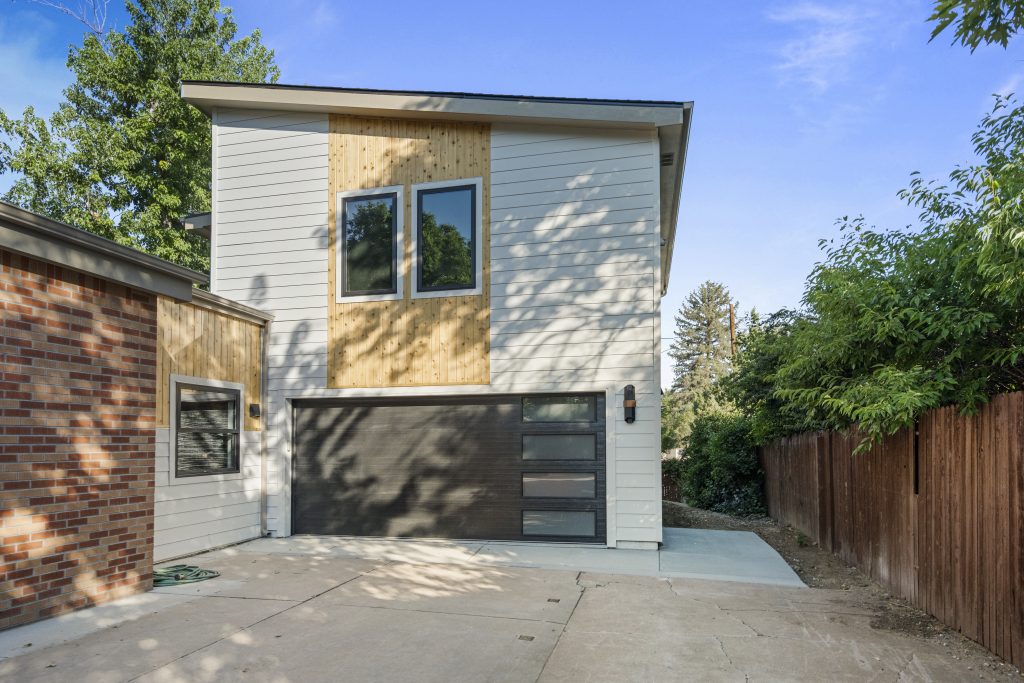
Thinking about building an accessory dwelling unit (ADU) in Centennial, Colorado? Before you call a single contractor, you need to know what money actually buys at each budget level. Not the glossy estimate, but the honest, all-in number after permits, site prep, utility connections, and finishes are accounted for.
Here’s the reality: ADU costs in the Denver metro have surged over the past three years, and Centennial, with its specific zoning rules, utility connection requirements, and new state legislation, has its own distinct cost landscape. A $150K ADU and a $350K ADU are entirely different products. This guide breaks down what you actually get at each tier so you can budget with confidence.
Why ADU Costs in Centennial Are Different From Denver
Centennial is not Denver. While the two cities share a metro area, their ADU regulatory environments diverge in meaningful ways that affect your budget. Under Colorado House Bill 24-1152, which took full effect on June 30, 2025, Centennial, as a municipality within a Metropolitan Planning Organization, must now allow ADUs on any single-family lot. That’s good news. But Centennial still enforces its own size caps, design compatibility rules, and utility requirements that add costs you won’t encounter in every city.
What’s Included in Every Centennial ADU Cost Estimate?
Before we dive into the three budget tiers, let’s establish what a real, all-in ADU cost includes. Many contractor bids intentionally exclude several line items. A complete budget must account for all four cost categories:
Pre-construction costs include architectural plans, structural engineering drawings (which must be stamped by a licensed engineer), the mandatory pre-submittal meeting with the City of Centennial, and permit fees. This category alone typically runs $10,000–$30,000 and is commonly omitted from initial contractor bids.
Site preparation and foundation covers grading, excavation, and the engineered foundation that Centennial requires all ADUs to have. ADUs must be permanently affixed — no slab-on-grade shortcuts for a structure you want permitted and appraised properly.
Labor and materials is the bulk of the budget: framing, roofing, windows, plumbing, electrical, HVAC, insulation, and interior finishes.
Utility connections and site improvements include connecting water, sewer, and electrical to the primary home’s lines, plus any driveway modifications required under Centennial’s zoning standards.
The $150,000 ADU: What You’re Working With
Budget Tier
$130K–$170K
The Entry-Level ADU — Garage Conversion or Small Attached Unit
At $150,000, you are not building a freestanding backyard cottage in Centennial. What you can do at this price point is a garage conversion, a basement ADU, or a very small attached addition — provided your existing foundation, plumbing, and electrical can support it.
Typical Type
Garage conversion / Attached interior
Sq Footage
~245–500 sq ft
Bedrooms / Bath
Studio or 1BR / 1BA
Finish Level
Builder-grade / functional
New Foundation?
No (uses existing)
Est. Monthly Rental Income
$1,200–$1,600/mo
Where the $150K Goes
| Line Item | Estimated Cost |
|---|---|
| Architectural plans + structural engineering | $8,000–$14,000 |
| Permit fees (City of Centennial) | $2,500–$5,000 |
| Site prep (minimal – existing structure) | $2,000–$5,000 |
| Framing, insulation, drywall | $25,000–$40,000 |
| Electrical upgrade / new panel | $8,000–$15,000 |
| Plumbing (bathroom + kitchen rough-in) | $12,000–$20,000 |
| HVAC (mini-split system) | $5,000–$9,000 |
| Windows, doors, exterior finish | $10,000–$16,000 |
| Interior finishes (cabinets, flooring, fixtures) | $18,000–$28,000 |
| Contingency (10%) | $10,000–$15,000 |
| Total Range | $100,500–$167,000 |
The catch: A $150K budget assumes your existing garage foundation is structurally adequate. In Centennial’s residential neighborhoods, roughly 95% of existing garage foundations are not engineered to support a second story or full living conversion without remediation. Get a structural assessment before committing.
Best For
Homeowners who want to house an aging parent or adult child at a lower entry cost, or generate modest rental income without the complexity of new construction. This is also the right tier if your property has a basement that can be permitted as a separate dwelling unit.
The $250,000 ADU: The Sweet Spot
Mid-Range Tier
$220K–$280K
The Functional Detached Cottage — 1–2 Bedrooms, Real Rental Value
The $250,000 range is where Centennial ADU projects start to make real financial sense as rental investments. At this budget, you’re looking at a purpose-built detached ADU of approximately 500–650 square feet — a proper, freestanding unit in your backyard with its own entrance, kitchen, and bedroom.
Typical Type
Detached backyard cottage
Sq Footage
~500–650 sq ft
Bedrooms / Bath
1BR / 1BA (some 2BR possible)
Finish Level
Mid-grade / move-in ready
New Foundation?
Yes – engineered slab or drilled piers
Est. Monthly Rental Income
$1,600–$2,100/mo
Where the $250K Goes
| Line Item | Estimated Cost |
|---|---|
| Architectural plans + structural engineering | $14,000–$22,000 |
| Permit fees + pre-submittal meeting | $4,000–$8,000 |
| Site prep: grading, excavation, drainage | $8,000–$18,000 |
| Engineered foundation (slab or piers) | $15,000–$28,000 |
| Framing, sheathing, roofing | $32,000–$48,000 |
| Electrical (new service from primary home) | $10,000–$18,000 |
| Plumbing (connect to primary home’s lines) | $14,000–$22,000 |
| HVAC (mini-split system) | $6,000–$11,000 |
| Windows, doors, exterior finish | $16,000–$26,000 |
| Interior finishes (mid-grade) | $28,000–$42,000 |
| Utility system development fees (if tap upgrade needed) | $5,000–$15,000 |
| Contingency (10%) | $20,000–$26,000 |
| Total Range | $172,000–$284,000 |
ROI perspective: At $1,800/month in rental income, a $250,000 ADU investment yields a gross return of approximately 8.6% annually — before financing costs. The National Association of Realtors has found that homes with ADUs are priced roughly 35% higher than comparable properties without them.
What You’re Getting in the $250K Finish Package
At this tier, expect LVP or engineered hardwood flooring, quartz or laminate countertops, standard stainless appliances (range, refrigerator, dishwasher), tile bathroom with a prefab shower, and a mini-split HVAC system. The exterior will be architecturally compatible with your primary home — a Centennial requirement — using matching siding, roof pitch, windows, and exterior colors.
What you are not getting at $250K: custom cabinetry, luxury appliances, smart home systems, or a large yard-side deck. Those extras push you into the $350K tier.
Best For
Homeowners looking to generate meaningful rental income, house a family member with genuine privacy and comfort, or add appraised value to their Centennial property ahead of a refinance or eventual sale. This is the most common budget range for new ADU construction in the Denver metro area.
The $350,000 ADU: The Premium Build
Premium Tier
$320K–$400K+
The Full-Featured Detached Unit — Maximum Size, High-End Finishes
At $350,000 in Centennial, you are building the maximum allowable detached ADU — 800 square feet — with high-end finishes, energy-efficient systems, and the kind of quality that commands top-dollar rental income or provides a genuinely luxurious space for a family member. This is essentially a high-spec studio apartment or 2-bedroom unit built to last.
Typical Type
Detached ADU, max sq footage
Sq Footage
700–800 sq ft (Centennial max)
Bedrooms / Bath
2BR / 1–2BA
Finish Level
High-end / custom
New Foundation?
Yes – full engineered foundation
Est. Monthly Rental Income
$2,000–$2,800/mo
Where the $350K Goes
| Line Item | Estimated Cost |
|---|---|
| Architectural plans + structural engineering | $18,000–$30,000 |
| Permit fees + pre-submittal meeting | $5,000–$10,000 |
| Site prep: grading, drainage, landscaping tie-in | $12,000–$22,000 |
| Full engineered foundation | $22,000–$38,000 |
| Framing, sheathing, premium roofing | $45,000–$65,000 |
| Electrical (new dedicated service) | $14,000–$22,000 |
| Plumbing (full kitchen + 1.5–2 baths) | $20,000–$32,000 |
| HVAC (ducted or high-efficiency mini-splits) | $10,000–$18,000 |
| Windows, doors, premium exterior finish | $22,000–$38,000 |
| Interior finishes (custom / high-end) | $55,000–$80,000 |
| Deck, outdoor space, landscaping | $8,000–$18,000 |
| Utility system development fees | $5,000–$15,000 |
| Contingency (10%) | $28,000–$39,000 |
| Total Range | $264,000–$427,000 |
Note on the range: The wide variance at this tier reflects significant swings in foundation type (drilled piers vs. spread footings can differ by $15,000+), site complexity, finish selections, and whether a soils report is required. In Centennial, if your primary home sits on drilled piers, a structural engineer will require a soils report before designing your ADU foundation — budget $3,000–$6,000 for that alone.
What “High-End Finishes” Actually Means at This Tier
The $350K finish package typically includes hardwood or premium LVP flooring throughout, quartz countertops, custom or semi-custom cabinetry, stainless steel appliance package with a full-size refrigerator and gas range, tile walk-in shower, in-unit laundry hookups, smart thermostat and lighting, and an outdoor deck or patio. Exterior finishes will be fully custom-matched to your primary home’s architectural character — as Centennial’s design compatibility standards require.
Best For
Homeowners who want maximum rental income potential, plan to house a family member long-term in genuine comfort, or are building with an eye toward maximizing property value before a sale. At this tier, the ADU often functions as a selling point comparable to a renovated kitchen or master suite addition.
Side-by-Side: The Three Tiers at a Glance
| Feature | $150K Tier | $250K Tier | $350K Tier |
|---|---|---|---|
| Typical sq footage | 245–500 sf | 500–650 sf | 700–800 sf |
| Detached structure | ✗ | ✓ | ✓ |
| New engineered foundation | ✗ | ✓ | ✓ |
| 2 bedrooms possible | ✗ | Sometimes | ✓ |
| High-end finishes | ✗ | ✗ | ✓ |
| In-unit laundry | ✗ | Add-on | ✓ |
| Outdoor deck / patio | ✗ | ✗ | ✓ |
| Est. monthly rent (2025) | $1,200–$1,600 | $1,600–$2,100 | $2,000–$2,800 |
| Gross yield (approx.) | 9–12% | 7–10% | 6–9% |
Note: Yield calculations are gross (pre-financing, pre-tax, pre-vacancy). They reflect construction cost divided by annual rental income estimate. Lower-cost conversions often show higher gross yields, but carry more risk due to existing structure variables.
Centennial ADU Regulations You Must Know Before You Build (2025)
????
Size limits Detached ADUs: 800 sq ft maximum. Attached/interior: cannot exceed 50% of primary home’s square footage. No minimum size restriction under HB 24-1152 (state mandates allowing 500–750 sq ft minimum).
????
Utility connections ADUs must tie into the primary home’s existing water and sewer lines. Separate utility taps are not permitted. Larger tap size upgrades trigger incremental System Development Fees.
????
Architectural compatibility The ADU must match the design, materials, and character of the primary home — including roof pitch, siding, windows, and exterior colors. This is enforced during permit review.
????
Pre-submittal meeting required Before applying for a permit, homeowners must schedule a pre-submittal meeting with the City of Centennial to confirm zoning compliance. Budget time and potentially a small fee for this step.
????️
No short-term rentals STRs (like Airbnb) are prohibited for ADUs in Centennial, except in Planned Unit Developments that previously allowed them. ADUs cannot be sold separately from the primary lot.
✅
Administrative approval only Under HB 24-1152, ADU permits are reviewed administratively — no public hearings, no neighborhood approval required, no subjective design reviews.
The “Hidden” ADU Costs That Blow Budgets in Centennial
Even with a solid estimate in hand, Centennial ADU projects routinely run 10–20% over initial projections. Here are the line items most frequently underestimated or omitted:
Soils report ($3,000–$6,000): If your primary home sits on drilled piers, any structural engineer will require a soils report before designing the ADU foundation. This cannot be skipped and is rarely included in initial bids.
System Development Fees for tap size upgrades ($5,000–$20,000): If your ADU requires a larger water tap than your existing connection supports, Centennial charges incremental SDFs based on the upgraded connection size. This is specific to Centennial’s utility rules.
Driveway modifications ($2,000–$8,000): Centennial requires driveways to comply with city zoning and safety standards. If your project requires a new curb cut or driveway extension to access a detached ADU, this cost can be significant.
Contingency shortfall: Budget a minimum 10% contingency — 15% if your site has any complexity (sloped lot, mature trees, aging infrastructure). Colorado contractors are stretched thin, and change orders on ADU projects have become routine.
Frequently Asked Questions: ADUs in Centennial, Colorado
How much does it cost to build an ADU in Centennial, Colorado?
ADU costs in Centennial, CO range from approximately $130,000 for a basic garage conversion to $400,000+ for a fully custom 800-square-foot detached unit. The most common range for a functional detached ADU is $220,000–$290,000, all-in.
Do I need a permit to build an ADU in Centennial, CO?
Yes. All ADUs require a building permit in Centennial. Under HB 24-1152 (effective June 30, 2025), applications are reviewed administratively with no public hearing required. Homeowners must schedule a pre-submittal meeting with the city before submitting plans.
What is the maximum ADU size in Centennial, Colorado?
Detached ADUs in Centennial cannot exceed 800 square feet. Attached or interior ADUs cannot exceed 50% of the primary residence’s total square footage.
Can I rent out my ADU in Centennial?
Yes — long-term rentals are permitted and HB 24-1152 explicitly prohibits Centennial from requiring owner-occupancy as a condition. However, short-term rentals (Airbnb, VRBO, etc.) remain prohibited in Centennial except in specific Planned Unit Developments that previously allowed STRs.
Does building an ADU increase property value in Colorado?
Yes, meaningfully. Research from the National Association of Realtors indicates homes with ADUs are priced approximately 35% higher than comparable properties without them, particularly in supply-constrained markets. In the Centennial/Denver metro, that translates to real appraised value increases — especially as ADU acceptance grows under the new state law.
How long does it take to get an ADU permit in Centennial, Colorado?
Under HB 24-1152, municipalities must review ADU applications within a 90-day window. Expect 60–90 days for permitting, plus 4–8 weeks for design and plan preparation before submission. Total timeline from concept to groundbreaking is typically 4–6 months; construction adds another 4–8 months depending on project size.
Ready to Plan Your Centennial ADU?
Get a free, no-obligation consultation with a licensed ADU builder familiar with Centennial’s specific regulations, utility requirements, and zoning rules.Get a Free ADU Consultation →