
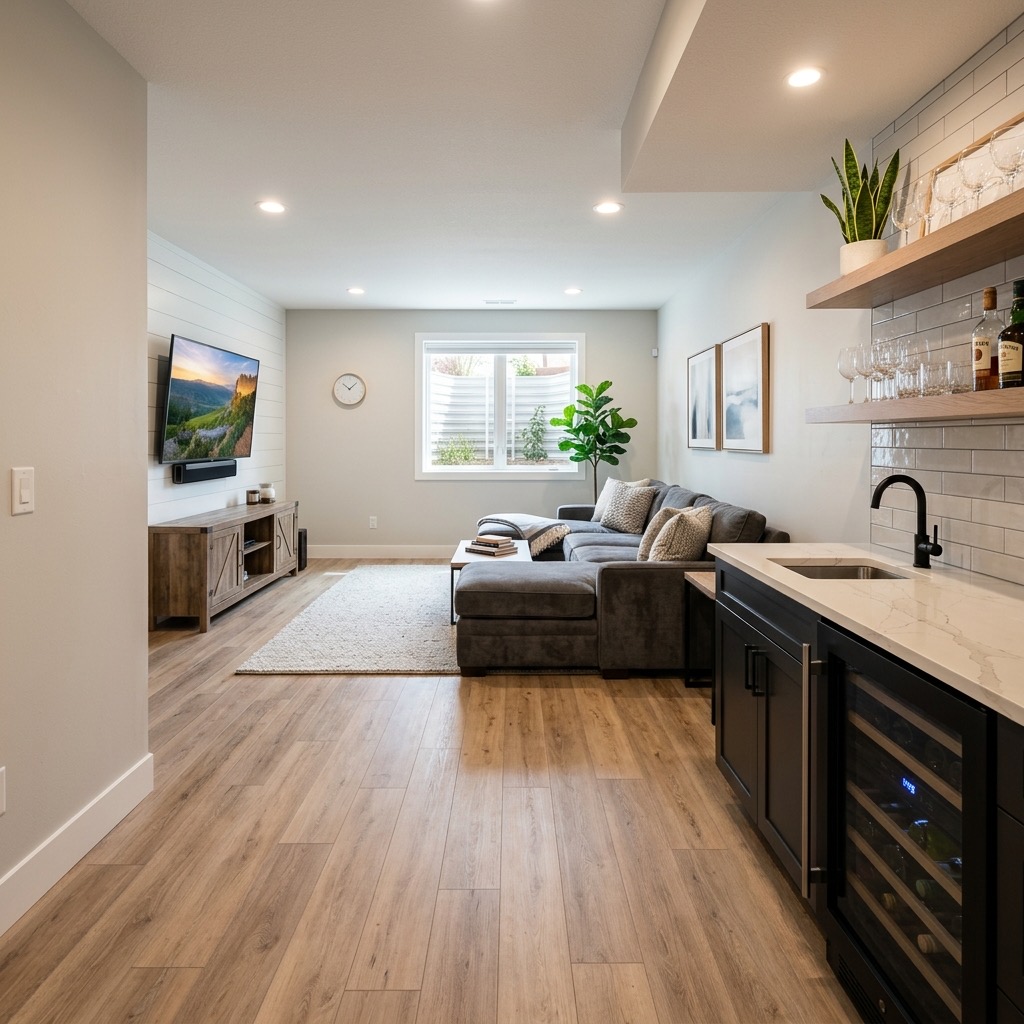
Finishing your basement is one of the biggest financial decisions you’ll make as a Denver homeowner, and most people go into it without a clear picture of the return. You’ve probably heard that it “adds value,” but what does that actually mean in dollars when your home hits the market in Highlands Ranch, Stapleton, or Washington Park?
The answer is more nuanced than a single percentage, and more promising than most contractors will tell you. Here’s what the data says, why Denver’s market is uniquely positioned for basement ROI, and exactly what separates a basement remodel that pays off from one that doesn’t.
What the National Cost-vs-Value Data Actually Says
National cost-versus-resale data tracks average project costs against the resale value those projects generate, and basement finishing consistently ranks among the top remodeling investments in the country.
Key national figures:
- Average cost to finish a basement: $57,500–$75,000
- Average resale value added: $48,000–$58,000
- Average national ROI: ~63–75%
That might not sound like a home run until you consider what you’re comparing it to. A primary suite addition, one of the most popular major remodels, returns roughly 33% nationally. A bathroom addition comes in around 53%. Basement finishing routinely beats both.
And in markets like Denver? The numbers skew even higher.
How Denver’s Real Estate Market Changes the Equation
Denver isn’t a typical housing market. Median home values in the metro area consistently rank in the top 15–20 nationally, and the inventory-to-demand ratio has kept buyer competition elevated even as interest rates have fluctuated since 2022.
What that means for basement ROI comes down to a few Denver-specific factors:
Buyers Expect More Finished Square Footage Per Dollar
Denver buyers comparing homes in the $550,000–$850,000 range are making sharp comparisons. When two homes are priced similarly, a finished basement often becomes the tiebreaker, not just a nice-to-have. Local appraisers typically value finished basement square footage at 50–60% of above-grade square footage, which translates to significant appraised value in neighborhoods where above-grade space runs $300–$450 per square foot.
The Denver Lot Premium Pushes Buyers Below Grade
Unlike sprawling Sun Belt metros where you can simply build a larger home, Denver’s lot constraints, particularly in neighborhoods like Berkeley, Sloan’s Lake, and Congress Park, mean that finished basements are often the only realistic way to add livable square footage without a costly addition. That scarcity increases the competitive value of a well-finished lower level.
Colorado’s Basement Culture Is Built into the Market
Roughly 80% of homes in the Denver metro area have basements, a much higher percentage than most major U.S. cities. That means buyers are accustomed to evaluating them. An unfinished basement in a market where most comps show finished space is a liability, not neutral ground. You’re not just missing out on upside, you’re potentially being discounted.
Running the Real Numbers: A Denver Example
Let’s make this concrete. Consider a 1,000-square-foot unfinished basement in a home in Aurora or Littleton:
| Factor | Estimate |
|---|---|
| Cost to finish (mid-grade) | $45,000–$70,000 |
| Added appraised value (50–60% of above-grade $/sqft) | $55,000–$90,000 |
| Estimated ROI | 78–128% |
| Potential increase in listing price leverage | $40,000–$65,000 above comparable unfinished homes |
These are realistic ranges based on current Denver-area cost data and typical appraiser methodology, not best-case scenarios. The spread depends heavily on finish quality, layout functionality, and whether the space includes a bathroom, bedroom, or wet bar (more on that below).
What Finishes Actually Drive Resale Value (and What Doesn’t Move the Needle)
Not all finished basement square footage is created equal. This is where homeowners leave money on the table by prioritizing what they want over what buyers value.
High-ROI Basement Features in Denver
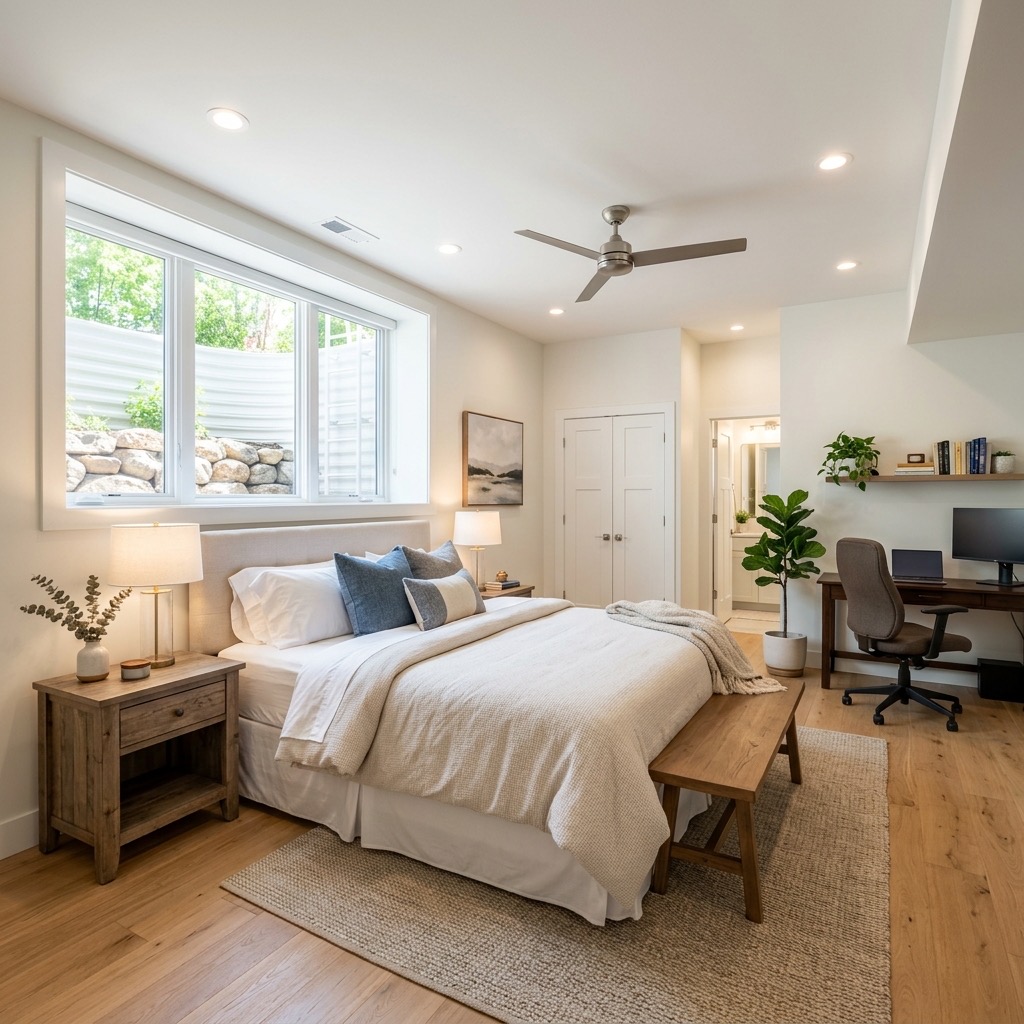
A legal egress bedroom. Adding a conforming egress window and bedroom converts your basement into a multi-bedroom home for appraisal purposes. In Denver, adding even one bedroom can increase your appraised value by $15,000–$25,000 independent of the square footage.
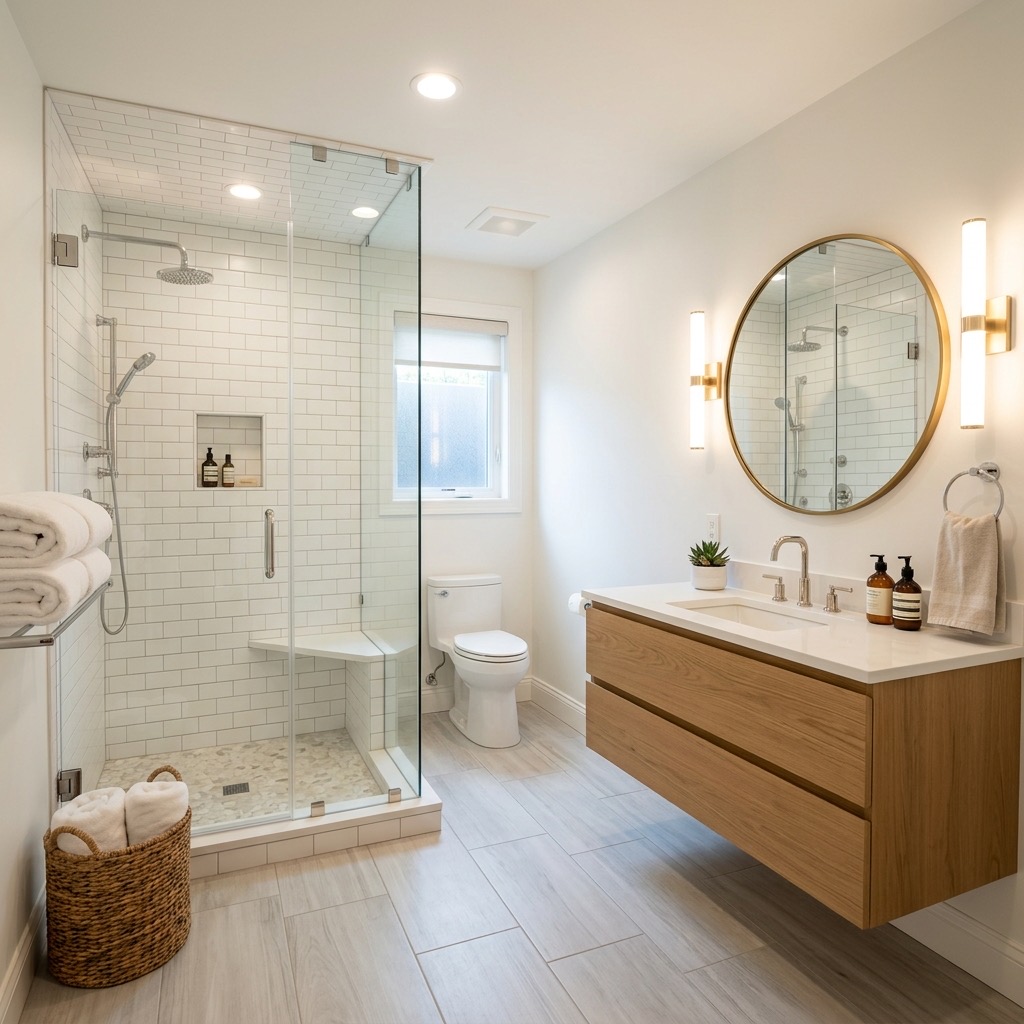
A full or 3/4 bathroom. Appraisers and buyers treat bathrooms as discrete value units. A below-grade bathroom, done properly, consistently adds $10,000–$20,000 in resale value and opens the space to rental income or multigenerational living scenarios.
Wet bar or kitchenette. Popular in Denver’s active, entertaining-oriented culture, a well-designed wet bar adds perceived lifestyle value that translates to faster sales and stronger offers. It also positions the space for Accessory Dwelling Unit (ADU) potential, which is increasingly relevant as Denver has updated its zoning codes.
Proper egress and code compliance. This sounds obvious, but non-permitted basements are a serious liability at closing. Denver buyers and their inspectors look for permits. An unpermitted basement can derail financing or force price concessions that wipe out your profit margin entirely.
Features That Don’t Recover Their Cost
- Overly custom home theaters — buyers may not share your vision; a media-ready space is better
- Niche built-ins that reduce flexible square footage
- Luxury-level finishes in a mid-range neighborhood — appraisers cap value at neighborhood comps
How to Protect Your Return
- Solve moisture first. Waterproofing and a dry, well-sealed foundation come before any finishes. Skimping here undoes everything built on top of it.
- Keep finishes neutral but durable. Good flooring, good lighting, and clean trim. You don’t need luxury materials; buyers look for durability and light.
- Keep your records. Save permits, inspection sign-offs, and project costs. Clean records help appraisers and buyers count the added square footage.
- Show the space as flexible. In listing photos, show the basement as a bedroom suite, an office, and a media room so buyers see every way they could use it.
The Hidden ROI: What Sale Price Data Misses
Resale value is the obvious metric, but there are two other return levers that rarely make it into cost-vs-value reports.
Reduced time on market. In Denver’s competitive price bands, homes with finished basements consistently sell faster than comparable unfinished properties. Days-on-market reduction has a real dollar value when you factor in carrying costs, price reductions, and negotiating leverage.
Rental income potential. Denver’s long-term rental market is robust. A properly configured basement with a separate entrance, egress bedroom, and bathroom can generate $1,200–$1,800/month in rental income, and the capitalized value of that income stream can dwarf the one-time appraisal bump. Many Denver homeowners who work with a basement remodel contractor specifically design the space for income potential alongside personal use.
When a Basement Finish Isn’t the Best Move
A basement finish is usually a strong investment, but not always. Hold off, or look at a smaller targeted remodel instead, if:
- the basement would need major foundation work first
- a legal egress window isn’t possible
- the ceiling is low or the space has serious water problems
- the basement is small compared with what it would cost to finish
And if your kitchen is badly dated in a neighborhood where buyers expect a high-end kitchen, that may still be the better first project.
How Much Does a Finished Basement Add to Home Value: A Quick Summary
If you want a clean answer: finishing a basement in Denver typically adds $40,000–$90,000 in appraised value, depending on square footage, finish level, and whether functional rooms like bedrooms and bathrooms are included. Most well-executed projects in the Denver metro return 70–120% of the investment in direct home value, before factoring in rental income or lifestyle value.
That’s a strategic asset you’ve added to your home.
Frequently Asked Questions
Does finishing a basement increase property taxes in Denver?
Yes, in most cases. When you pull permits for a basement finish in Denver, which you should, the county assessor typically updates your property record to reflect the additional finished square footage. Your assessed value and property taxes will likely increase modestly. However, the increase is generally small relative to the value added, and it’s a sign the project was done correctly.
How long does it take to finish a basement in Denver?
A standard basement finish with a contractor typically takes 6–12 weeks from demo to final inspection, depending on scope. Projects that include rough-in plumbing for a bathroom or significant electrical work can run longer. Permitting timelines in Denver and surrounding municipalities vary and can add 2–4 weeks before work begins.
Does finished basement square footage count the same as above-grade square footage?
No, and this matters for your expectations. Appraisers follow standard measurement rules that distinguish above-grade from below-grade finished space. Finished basement square footage is listed separately and valued at approximately 50–60% of above-grade square footage in most Denver neighborhoods. That’s still significant value, but it’s why a 1,000 sq ft basement won’t add the same appraised value as a 1,000 sq ft main-floor addition.
What’s the minimum I should spend on a Denver basement finish to see a good ROI?
There’s no fixed minimum, but under-investing creates problems. A budget below $30,000 for a full basement often results in finishes that don’t meet buyer expectations in Denver’s market, leading to lower appraisals and longer time on market. Mid-grade finishes, quality LVP flooring, 8-foot drywall, good lighting, and at least one bathroom, typically hit the ROI sweet spot in the $45,000–$70,000 range.
Should I finish my basement before selling or sell as-is?
It depends on your timeline and the condition of the space. If you have 6+ months before listing, a professional basement finish almost always yields a stronger net return than selling with unfinished space and pricing down to compete. If you’re selling in 60 days or less, consult with a local contractor to assess whether a quick-turn finish makes financial sense for your specific home and neighborhood.
Ready to Know What Your Basement Is Worth?
At Building While Giving, we’ve helped Denver-area homeowners transform unfinished basements into high-value, fully permitted living spaces, from Capitol Hill to Castle Rock. Every project we take on is designed with your ROI in mind, not just your immediate wish list.
If you want a straight answer about what your specific basement could add to your home’s value, and what it would realistically cost to get there, we’re here for that conversation.
Schedule your free basement consultation today and get a realistic, no-pressure estimate from a Denver basement remodel contractor who knows what the numbers actually look like on the ground.
—