
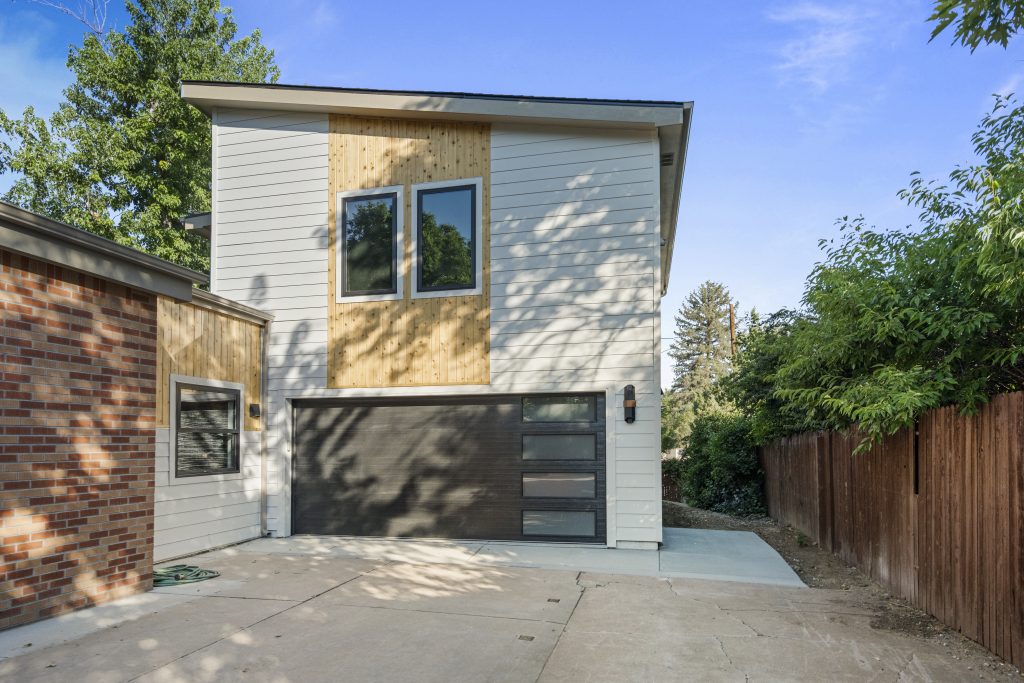
Accessory Dwelling Units (ADUs) are booming across the Denver metro as homeowners seek smart ways to add space, increase property value, and generate rental income. But one big question often comes up early: Should my ADU be detached or attached to the primary home?
Both options have pros and cons, especially here in Denver’s unique market. Let’s break down the differences so you can decide what’s best for your lot, your budget, and your goals.
What Are Attached and Detached ADUs?
Attached ADUs These are additions connected directly to the main house, like a converted garage, basement suite, or a bump-out off the side or back of the home.
Detached ADUs These stand-alone structures sit separate from the main house, think backyard cottage, carriage house, or a small rental unit in the rear yard.
Key Factors to Consider
1. Lot Size and Shape
Denver Neighborhoods: Denver lots vary drastically from tight parcels in City Park and Washington Park to deeper lots in Green Valley Ranch or Stapleton.
- Attached ADU Advantage:
Works well on narrow lots or places where setbacks limit building separate structures.
- Detached ADU Advantage:
Great for wide or deeper lots where there’s space behind the home. These leave the main footprint untouched.
Denver Tip: If your lot is under 5,000 sq ft, an attached ADU often fits more easily.
2. Cost Differences
Attached ADUs
- Often less expensive per sq. ft. because they can share walls, utilities, and rooflines with the main structure.
- Example: Converting a garage may cost significantly less than framing a new structure.
Detached ADUs
- Typically higher cost due to separate foundation, roof, utilities, and potentially more site work.
- But they can offer better rental income potential due to privacy.
Denver Insight: Construction costs in Denver have been above the national average, so maximizing efficiency can save big dollars.
3. Privacy and Rental Appeal
Detached ADUs
- More privacy — tenants have no shared walls with the main home.
- Higher rental potential — privacy can translate to higher rent, especially from long-term tenants. Short-term stays are only allowed in Denver when the property is your primary residence.
Attached ADUs ✔️ Easier access for family members (in-laws, adult kids) or aging parents. ✔️ Great solution when privacy isn’t the top priority.
4. Zoning & Permits in Denver
Denver has been ADU-friendly, but rules still matter:
- Setbacks: Detached ADUs often need more rear and side-yard clearance.
- Height Limits: Detached ADUs can go up to 24 feet and 1.5 stories, but on narrow lots a sloped “bulk plane” shapes the roofline.
- Parking Requirements: No parking is required for the ADU itself, but converting a garage that holds the main home’s required parking can trigger a costly replacement requirement.
Pro Tip: Always verify zoning with the City & County of Denver before planning — requirements still vary by zone district. Our guide to Denver ADU zoning rules and permits walks through them.
5. Lifestyle Goals
Ask yourself:
- Are you building for rental income, multi-generational living, or extra storage/workshop space?
- Do you want the ADU to feel like a separate home or blend into the existing structure?
Detached ADUs are ideal for income and privacy. Attached ADUs are best for family use, cost-efficiency, and smaller lots.
Quick Comparison at a Glance
| Feature | Attached ADU | Detached ADU |
|---|---|---|
| Cost | Lower | Higher |
| Privacy | Shared | Separate |
| Rental Appeal | Medium | High |
| Ideal for Small Lots | ⭐️ | — |
| Permitting Complexity | Lower | Higher |
| Utility Routing | Easier | More Work |
Real-World Denver Example
Imagine a bungalow in Berkeley or Highland with a deep backyard.
- A detached ADU could sit behind the main house with optimal privacy. This is appealing to renters or guests.
- On a smaller lot in Platt Park or Congress Park, an attached ADU , like a basement conversion or garage remodel might be the most cost-effective strategy.
Your lot’s dimensions, setbacks, and slope can be the deciding factors.
Other Spots to Consider: Above the Garage or in the Basement
Above a detached garage. The space over a garage you already have can become a carriage-house ADU that keeps your yard open. The garage has to be strong enough to carry a living unit, so expect structural reinforcement, insulation, egress windows, and separate utility hookups. A contractor should check the garage’s bones before any plans are drawn.
In the basement. A basement ADU uses a shell that’s already built, so it’s often one of the most affordable ways to add a unit, and it doesn’t touch your yard. It needs its own exterior entrance, enough ceiling height (usually at least 7 feet), proper egress windows, its own ventilation, and a dry, well-sealed foundation.
For any attached unit, plan for sound insulation in the shared wall. Both households deserve their quiet. An inside connecting door can also help when you’re caring for a family member.
What Decides the Best Spot on Your Lot
- Utility distance. The closer the ADU sits to your existing water, sewer, and electrical lines, the less those connections cost.
- Slope. A sloped backyard may need grading or a more complex foundation. We check this upfront so there are no surprises on build day.
- Light and privacy. Good placement gives the unit natural light, keeps it from looking straight into a neighbor’s window, and leaves the occupant some outdoor space.
- Intended use. Family, long-term rental, or short-term rental each call for a different amount of separation from the main house.
Final Thoughts: There’s No One-Size-Fits-All
Detached ADUs offer privacy and higher rental appeal, but at a higher cost and more complex permitting. Attached ADUs are often more budget-friendly and easier to build. They are perfect for tight lots or family expansions.
Both options add significant value to Denver properties when planned right.
Ready to Explore What’s Best for Your Denver Lot?
If you’re curious whether a detached or attached ADU makes more sense for your property, we can help.
For pricing, see our guide to what an ADU costs to build in Denver.
For the city’s own ADU information, see Denver’s citywide ADU page.
Contact Building While Giving today for a personalized ADU feasibility plan, cost estimate, and site-specific design options, so you can make the smartest investment on your Denver lot.
—