
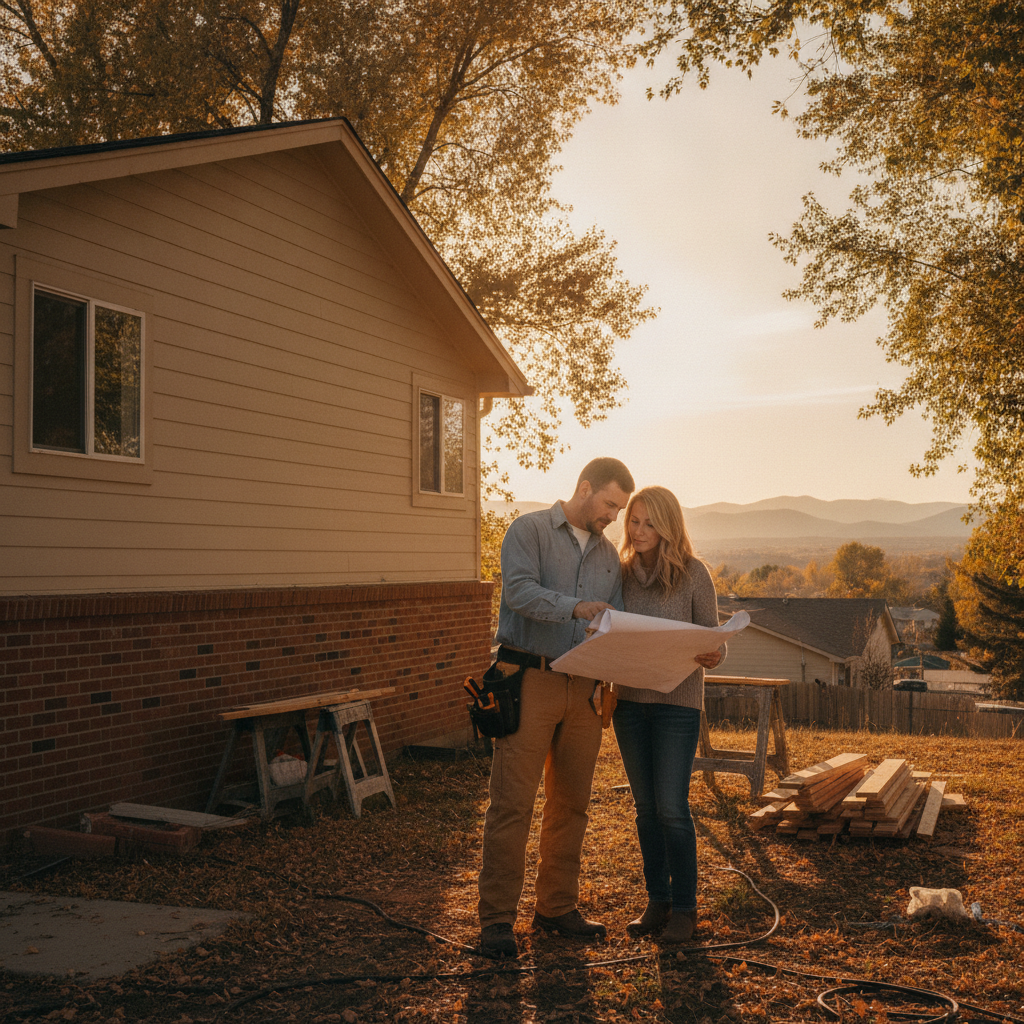
If you’re planning a remodel in Littleton, the contractor you hire matters more than almost any other decision you’ll make. Building While Giving has worked on kitchens, bathrooms, and additions across the Front Range, and we know the difference between a smooth project and a stressful one usually comes down to who you hired before the first wall came down. Here’s what to check before you sign anything.
Colorado doesn’t make this simple. Unlike states with a single statewide contractor license, Colorado leaves general contractor licensing to individual cities and counties. That means the burden of verifying a contractor’s credentials falls on you, the homeowner.

Why Colorado’s licensing rules put more responsibility on homeowners
Colorado has no statewide general contractor license. The Colorado Department of Regulatory Agencies (DORA) issues state-level licenses only for electricians and plumbers. Every other trade, including general contracting, is regulated city by city and county by county. That means a contractor could be properly licensed to work in one Front Range city and not authorized to pull permits in the next one over.
In practice, this means asking a Littleton contractor directly whether they hold the local business license and registration the city requires, and confirming they pull permits under their own name rather than asking you to pull them yourself. A contractor who avoids that question, or suggests skipping permits to save time, is telling you something important about how the rest of the project will go.
What to ask about insurance before anyone sets foot on your property
Ask for proof of general liability insurance and workers’ compensation coverage, not just a verbal assurance. If a worker is injured on your property and the contractor doesn’t carry workers’ comp, Colorado law can leave the homeowner exposed to that liability. A legitimate contractor will hand over a certificate of insurance without hesitation. It’s a routine request, and one they should be used to answering.
It’s also worth asking how long they’ve carried that coverage. A contractor who just activated a policy last week isn’t necessarily a problem, but it’s a detail worth a follow-up question rather than an assumption.
Why a written, fixed-scope contract protects you more than a handshake
Every serious remodeling project in Littleton should start with a written contract that spells out the scope of work, the materials being used, the payment schedule, and the timeline. Vague or open-ended contracts are where budgets quietly balloon: a change order here, an unaccounted-for material cost there, and a homeowner can end up paying 20 to 35% more than the original estimate with no clear explanation of why.
At Building While Giving, we walk every homeowner through a detailed, fixed-scope contract before any work begins, specifically because we’ve seen what an open-ended agreement can do to a family’s budget and their trust in the process.
How local experience shows up in the quality of the work
A contractor who has worked in Littleton specifically understands the permitting office, the typical housing stock, and the seasonal realities of building along the Front Range, including how Colorado’s swing between summer heat and winter cold affects scheduling and materials. That local familiarity that we have, shows up in fewer surprises during the permitting process and a project timeline that reflects reality rather than optimism.
It also matters when it comes to permits tied to specific systems. Colorado’s Department of Regulatory Agencies still requires state-licensed electricians and plumbers for that work regardless of who the general contractor is, so ask how a contractor manages those subcontracted trades and whether they coordinate the inspections themselves.
Why a permit matters beyond the paperwork
A permit exists to confirm that an inspector, someone with no financial stake in the project, signs off on the electrical, structural, and safety work in your home. Skipping that step to save time or money shifts real risk onto you: unpermitted work can complicate a future home sale, create issues with your homeowner’s insurance if something goes wrong, and leave you with no independent confirmation that the work meets code.
Ask a prospective contractor directly which permits your project will require and who is responsible for pulling them. A contractor who can answer specifically has done this before in your jurisdiction and knows what the inspection process involves.
Red flags to watch for during the first estimate
The estimate stage tells you a lot about how a contractor operates. A high-pressure sales pitch, an estimate that’s dramatically lower than every other bid you’ve received, or a request for a large deposit before any work or materials have been ordered are all worth pausing on. So is a contractor who is reluctant to put anything in writing, or who waves off your questions about insurance and licensing as unnecessary.
On the other hand, a contractor who walks your home carefully, asks detailed questions about how you use the space, and follows up with a written estimate that breaks down labor and materials separately is showing you how they’ll handle the rest of the project. That first meeting is usually a preview of your future relationship.
What references and past work can tell you that a sales pitch can’t
Ask for addresses or photos of completed projects near Littleton. A contractor confident in their work will point you to homes they’ve finished in the area. If a contractor is only able to offer out-of-state projects or work with no verifiable local address, treat that as a real gap.
Remodeling demand has stayed strong across the country. The National Association of Home Builders reported its Remodeling Market Index in positive territory for 24 consecutive quarters, with activity expected to grow further in 2026 and 2027. That steady demand means good contractors stay busy, so a company with a thin local track record despite claiming years in business is worth a second look.
Before you hire here’s what to verify
| What to verify | Why it matters | Red flag |
| Local business license & registration | Colorado regulates general contracting city by city and county by county, not statewide | Won’t confirm local registration or avoids the question |
| General liability & workers’ comp insurance | Protects you if a worker is injured on your property | Can’t produce a certificate of insurance |
| Written, fixed-scope contract | Prevents the scope creep that can add 20-35% to an open-ended estimate | Reluctant to put anything in writing |
| Permits pulled under the contractor’s name | Confirms an independent inspector signs off on electrical, structural, and safety work | Suggests skipping permits to save time or money |
| Verifiable local references | Confirms real, recent work in your area | Only offers out-of-state projects or no verifiable local address |
The giving model that sets Building While Giving apart
Beyond licensing and insurance, homeowners in Littleton are increasingly asking what a contractor’s business stands for. Here at Building While Giving we direct a percentage of every completed project to a nonprofit chosen by the homeowner, a giving model built into how we operate. Choosing a contractor whose success also means something for the community is one more way a remodel can do more than upgrade a house.
We’re not the right fit for every homeowner, and no contractor is. What we’d ask you to hold onto from this article is the checklist itself: confirm local licensing and registration, request proof of insurance, get everything in writing, ask about permits by name, and look for a track record you can verify. Whichever contractor you choose in Littleton, running through those five checks before you sign anything will save you more stress than almost any other step in the process.
Whether your next project is a kitchen remodel here in Littleton or a full whole-home renovation, the questions above apply the same way. Before you hire a general contractor for any project (bathroom, basement, or the whole house) the fundamentals of licensing, insurance, and a written contract stay the same.
FAQ
Should I pay a contractor 50% upfront?
Treat a request for a large deposit before any work or materials have been ordered as a red flag, the same as this article’s estimate-stage warning signs. A written contract with a payment schedule tied to project milestones protects you if the timeline shifts, and a legitimate Littleton contractor is used to working that way.
What is the best way to find a general contractor in Littleton?
Run through the same five checks covered above: confirm the local business license and registration, ask for proof of general liability and workers’ comp insurance, get a written fixed-scope contract, ask which permits the project needs by name, and look for verifiable local references or completed projects near Littleton.
What happens if my contractor doesn’t pull permits?
Skipping a required permit shifts real risk onto you: unpermitted work can complicate a future home sale, create problems with your homeowner’s insurance if something goes wrong, and leaves you with no independent inspector confirming the work meets code.
How do I verify a contractor’s insurance in Colorado?
Ask directly for a certificate of general liability insurance and workers’ compensation coverage, not just a verbal assurance. A legitimate contractor hands one over without hesitation; it’s a routine request they should be used to answering.
Ready to get started? Call Building While Giving at (720) 968-7874 or request a free estimate.