
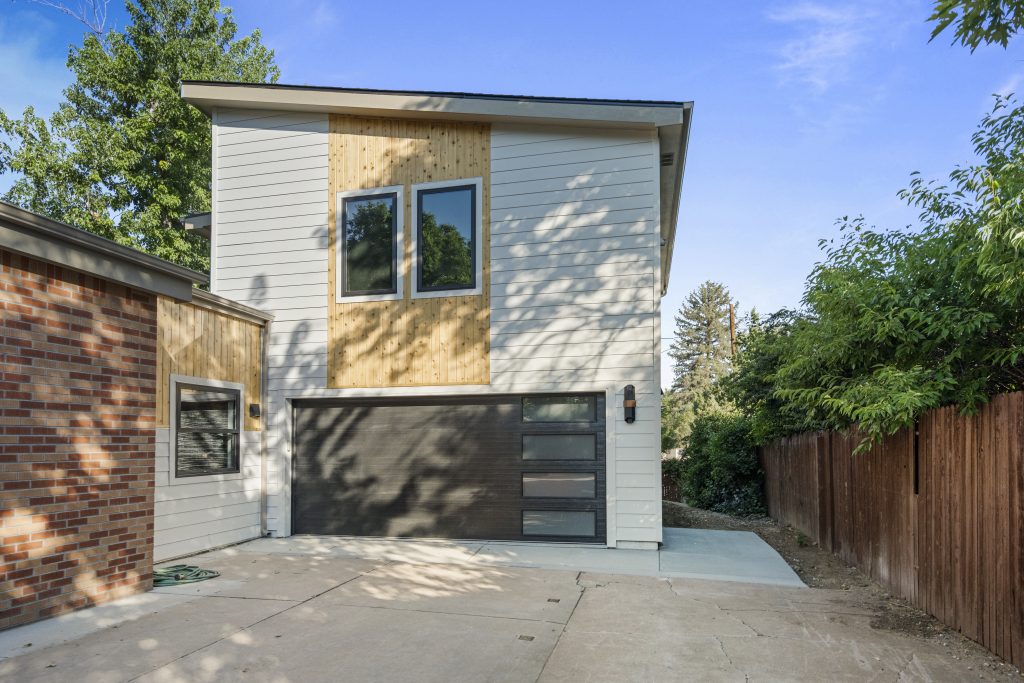
When your home starts to feel too small, you have two real options: add on, or sell and buy something bigger. Both can solve the space problem. They come with very different costs, timelines, and trade-offs. Here’s a practical, Denver-focused way to decide.
The Short Answer
- An addition (or remodel) usually wins if you love your neighborhood, your lot allows the work, and the space you need is modest compared with your current home.
- Moving usually wins if you need a different neighborhood, school, or commute, a much bigger jump in square footage, or a layout your home can’t realistically become.
What Moving Really Costs
Moving looks simple on paper. In practice, the costs stack up before you unpack a box:
- Agent commissions on the home you sell
- Closing costs on the home you buy
- Moving costs: packing, transport, and maybe storage or temporary housing
- A higher mortgage rate, if you locked in a lower rate years ago
- A higher price for a bigger home in a competitive market
On a typical Denver home, the transaction costs alone can reach tens of thousands of dollars. That money buys no new space. Then add the costs that don’t show up on a closing statement: new schools, a new commute, and leaving neighbors you know.
What an Addition Costs
On our published pricing, home additions in the Denver metro run $80,000 to $300,000 or more. Where yours lands depends on how much space you add, whether it includes a bathroom (plumbing costs more per square foot than a bedroom or office), how the foundation and roof tie into your house, and whether you build out or up. For a detailed example, see how much a home addition costs in Highlands Ranch.
Other ways to gain space without adding on
- Finish the basement. Basement finishing runs $30,000 to $60,000 or more on our pricing page, and it adds living space without expanding your footprint. See how much a finished basement adds to home value in Denver.
- Remodel what you have. Sometimes the house isn’t too small. The kitchen or bathrooms just don’t work for how you live.
Side by Side
| Factor | Moving | Adding on or remodeling |
|---|---|---|
| Upfront cost | High: commissions, closing, moving | Project-based; you choose the scope |
| Customization | Limited to what’s for sale | Built around your needs |
| Timeline | Depends on the market | Set by the project schedule |
| Disruption | Short and intense: packing, moving day | Longer: months of construction at home |
| Neighborhood | New area, schools, commute | You stay where you are |
| Value | Depends on the market | Can add value if it fits the neighborhood |
Four Things to Weigh Carefully
1. Value and resale
An addition can add value, but how much of the cost comes back at sale depends on the project, the neighborhood, and timing. Space that matches what nearby homes have tends to hold value. Don’t assume every dollar you spend becomes a dollar of value. Look at what similar homes on your street sell for.
2. Time and permits
Both paths take months. An addition means design, permits, and construction, with permit review built into the schedule. Moving means listing, offers, inspections, and closing, plus the risk of not finding the right home at the right price when you need it.
3. Lifestyle
Staying keeps your school district, commute, neighbors, and community, and the new space is built exactly for you. Moving can give you a different neighborhood, a bigger yard, or a shorter commute. These factors are often the deciding ones.
4. Risk
- Addition risks: hidden site or structural problems, change orders, permit surprises, and living through construction.
- Moving risks: market timing (selling fast but struggling to buy, or the reverse), higher mortgage payments or property taxes, and transaction costs.
Questions to Ask Yourself
- Do you need a different neighborhood, commute, or school? Then move.
- Does your lot allow the addition you want (setbacks, utilities, grading)? If not, moving may be the answer.
- Can you live with months of construction? If not, consider moving or a smaller project done in stages.
- Does the project need major system upgrades, like a new electrical panel or sewer line work? That raises the cost of staying. It may still be worth it if you love where you live.
- Has your family outgrown the house beyond what an addition can solve? Then moving makes more sense.
If You’re Leaning Toward an Addition
- Get a site visit to check grading, foundation, utility locations, and HOA and zoning rules.
- Ask for itemized written bids, permit handling, and realistic timelines.
- Set aside a contingency for hidden issues.
- Ask how the addition will change your property taxes and insurance.
- If cash flow is tight, consider phasing: do the structural work now and the finishes later.
If You’re Leaning Toward Moving
- Estimate your net proceeds: expected sale price minus commissions, closing costs, and repairs.
- Compare prices in the neighborhoods you’d consider, and their resale potential.
- Budget for moving costs, temporary housing if you need it, and the chance of moving twice.
When a Hybrid Makes Sense
Sometimes the smartest plan is both. A targeted remodel that fixes how your home works can buy you years in the neighborhood. Or it can help your home sell for more when you do decide to move.
How We Help You Decide
At Building While Giving, we build home additions across the Denver metro. We’ll visit your home, check what your lot and your city allow, and give you a written estimate for the addition or remodel. Then you can compare real numbers against what moving would cost you. And 5% of our profit from every project goes to a nonprofit you choose.
Schedule a consultation to talk it through.