
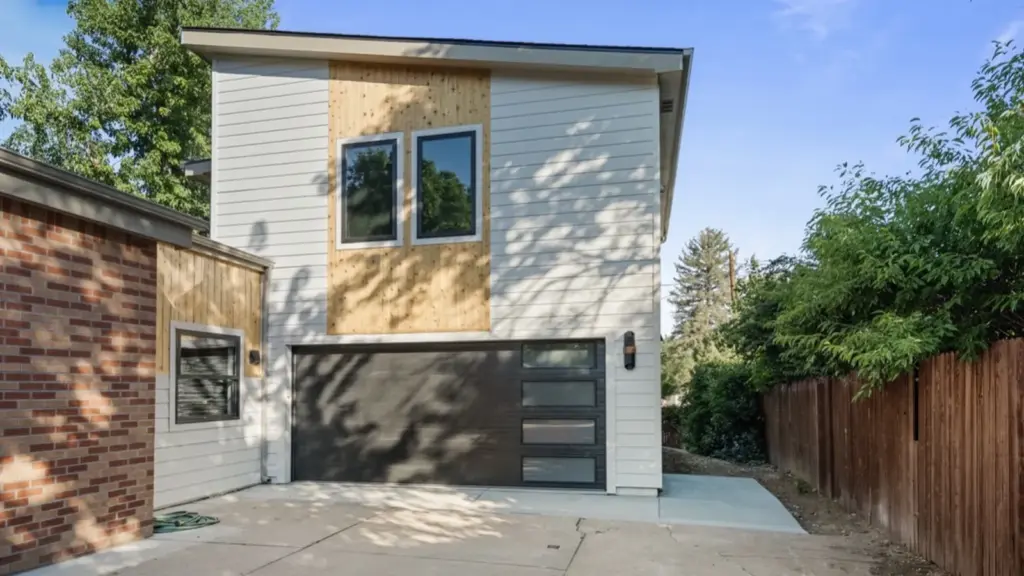
A home addition in Highlands Ranch usually falls within the range Building While Giving publishes for the Denver metro: $80,000 to $300,000 or more for an addition or accessory dwelling unit. Where your project lands depends on how much space you add, whether it includes a bathroom, how the new foundation and roof tie into your house, and what the Highlands Ranch Community Association (HRCA) and Douglas County require before anyone breaks ground.
This guide breaks down home addition cost for Highlands Ranch homeowners. You’ll see Denver benchmarks from Remodeling magazine’s Cost vs. Value Report, the local rules that shape every addition here, and how to turn a rough range into a real number for your house. When you’re ready for that number, the home additions and ADU team at Building While Giving can visit your home, take measurements, and give you a detailed written estimate. 5% of our profit on every project goes to a nonprofit of your choice.
What Does a Home Addition Cost in Highlands Ranch?
Most Highlands Ranch additions land between $80,000 and $300,000 or more, the range Building While Giving lists on its remodeling pricing page for additions and ADUs across the Denver metro. The company says those ranges are based on real Colorado projects. The spread is wide because “addition” covers everything from a single new bathroom to a full primary suite or a second story.
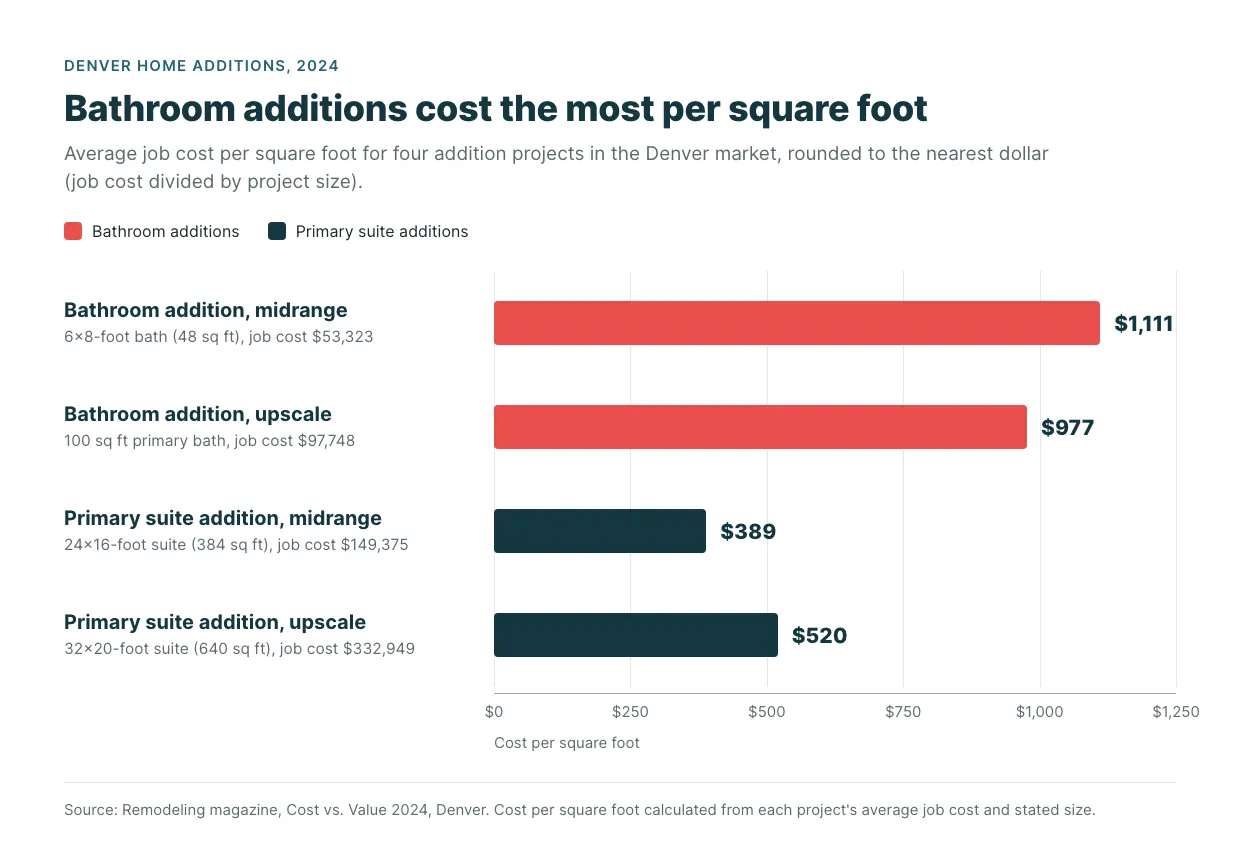
Denver benchmarks show where common projects fall. Remodeling magazine’s 2024 Cost vs. Value Report prices four addition projects for the Denver market, each with a defined size and finish level:
| Project (2024 Cost vs. Value, Denver) | Size and scope | Average job cost | Cost per sq ft |
|---|---|---|---|
| Bathroom addition, midrange | 6×8-foot bath, fiberglass tub/shower, tile floor | $53,323 | about $1,111 |
| Bathroom addition, upscale | 100 sq ft primary bath, frameless glass shower, heated floor | $97,748 | about $977 |
| Primary suite addition, midrange | 24×16-foot suite with walk-in closet and full bath | $149,375 | about $389 |
| Primary suite addition, upscale | 32×20-foot suite with sitting area and large primary bath | $332,949 | about $520 |
For simpler space, HomeGuide, a national cost publisher, puts a typical room addition at $125 to $250 per square foot nationally. Treat every national figure as a starting point; local labor and permitting set your actual price.
Primary suite additions are one of the projects Building While Giving names as popular in Highlands Ranch, and its Highlands Ranch page notes that much of the community’s housing dates to the 1980s, 1990s, and early 2000s. A suite sized for today’s expectations is often what those homes are missing.
What Moves the Cost of an Addition Up or Down?
Plumbing, structure, and how closely the addition has to match your house move the number most. Square footage matters too, but two additions of the same size can be tens of thousands of dollars apart.
Bathrooms cost the most per square foot. In the Cost vs. Value math above, a small bathroom addition runs about $1,000 per square foot or more in Denver, while a primary suite runs about $389 to $520. Every new fixture means supply lines, drains, venting, tile, and waterproofing packed into a small room. A bedroom or office with no plumbing spreads its cost over more open floor.
Going up costs more than building out. HomeGuide puts second-story additions at $200 to $500 or more per square foot nationally, because the existing walls and foundation have to carry a new floor.
The foundation is engineered here. Douglas County requires engineered foundation plans for residential additions, with each page stamped by a Colorado registered Professional Engineer. That’s for good reason: the Colorado Geological Survey calls swelling soil a common problem in the state, capable of causing severe damage to houses. If you’ve read our post on foundation warning signs in Colorado’s expansive soil, you know why this line item isn’t the place to cut.
Heating and cooling get sized, not guessed. The county asks for new equipment and ductwork to be sized by ACCA’s Manual J, S, and D methods. Douglas County sits in climate zone 5B under the 2021 International Energy Conservation Code, which sets the bar for insulation and windows. If your furnace can’t carry the new rooms, the addition may need its own system.
Matching the house is a requirement. HRCA guidelines say an addition must look like the original home, with matching materials and colors and a roof pitch as close to the existing one as possible. On a house built in the 1980s or 1990s, matching the existing siding, brick, or roofing is part of the scope, so price it in early.
Large additions may trigger wildfire rules. In areas Douglas County maps as fire intensity class 1 or 2, an addition that adds 500 square feet or more of occupiable space falls under the 2025 Colorado Wildfire Resiliency Code.
What Do HRCA and Douglas County Require Before You Build?
A Highlands Ranch addition needs two approvals before work starts: the HRCA’s architectural approval and a Douglas County building permit. The HRCA guidelines say so directly, and the county recommends getting your HOA approval before you apply for the permit.
On the HRCA side, plan for:
- A plan submittal. Additions need a site plan, floor plan, and elevations of both the existing house and the addition.
- A review fee. The HRCA charges an architectural review fee; its Community Improvement Services team (303-471-8821) has the current amount.
- Up to 30 days for a decision. The Architectural Review Committee acts within 30 days after it receives everything it asked for.
- A one-year window. Approved work must be finished within one year, or the HRCA may ask you to resubmit.
On the county side, the permit package includes scaled construction drawings, the engineered foundation plans, structural framing plans, an energy compliance path, and a drainage, erosion, and sediment control plan for the lot.
Design and engineering fees, HOA review, and permit fees all land before construction starts, so build them into your budget from day one. Building While Giving handles permits for its addition and ADU projects, so you aren’t the one chasing paperwork.
How Much of an Addition’s Cost Comes Back at Resale?
In Denver, additions recover less than a third of their cost at resale. The 2024 Cost vs. Value Report estimates a midrange primary suite recoups 31.1% of its cost in Denver, a midrange bathroom addition 26.8%, an upscale bath 25.4%, and an upscale primary suite 16.8%.
The report’s own authors add two cautions. Extra square footage brings higher maintenance and heating and cooling bills, and resale value is only one factor in deciding to remodel.
Highlands Ranch adds local context. The Census Bureau puts the median value of an owner-occupied home here at $712,700, and about 78% of homes are owner-occupied. If you plan to stay, the space you gain matters more than the resale math.
Compare an addition with new construction as well. The National Association of Home Builders found the average new single-family home cost about $162 per square foot to build in 2024. An addition costs more per foot: the Denver midrange suite above works out to about $389. It still needs its own design, permits, foundation, and roof tie-in, all for a small footprint.
Should You Add On or Move?
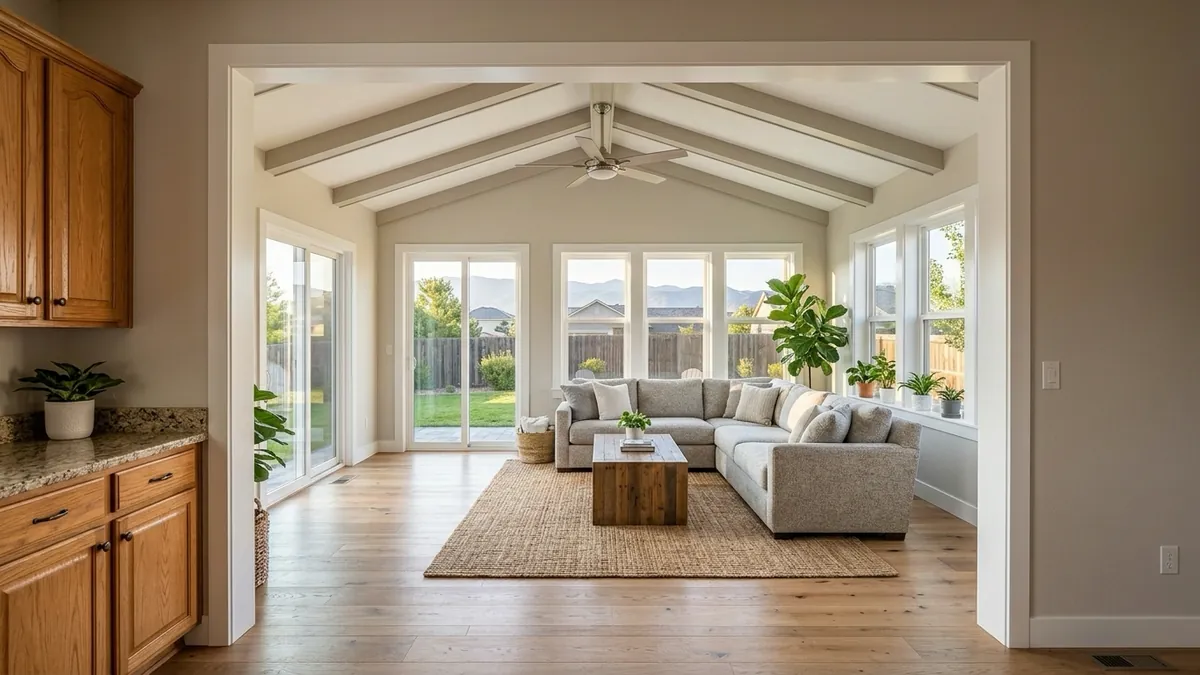
Adding on usually makes sense when you love your neighborhood and your lot can take the space you need. Moving makes more sense when you need a different location or far more room than your lot allows. We’ve covered that decision in depth in building an addition vs. moving in the Denver market, and the transaction costs of selling and buying in our move-or-remodel cost comparison.
One Highlands Ranch detail belongs in that math: the HRCA generally expects additions to stay within the side plane of the original home. Your lot’s setbacks and the HRCA’s view of side-yard additions decide what you can build before cost does, so check them first.
How Do You Get an Accurate Budget for Your Addition?
You get a reliable number from a site visit and a detailed written estimate. No online range can replace one. The Cost vs. Value authors say the same: the best local guide is an estimate from a reputable remodeler.
Here’s how Building While Giving gets you there:
- A consultation call. You talk through goals, budget, and timeline, and whether the project fits.
- An on-site visit. The team takes measurements and looks at the space with you.
- A detailed written estimate. You see a specific number for your project before any work begins.
- No surprise bills. If conditions inside the walls reveal something unexpected, the team talks with you before proceeding.
Before you sign with anyone, read the biggest mistakes homeowners make when planning an addition. And because 5% of our profit on every project goes to a nonprofit of your choice, your addition also supports a cause you care about. You can read how that works on our giving mission page.
FAQ
Is it cheaper to build an addition or buy a new house?
It depends on how much space you need and what moving would cost you. An addition avoids selling and buying costs and keeps you in your neighborhood, while a big jump in square footage can favor moving. Our addition vs. moving guide walks through the comparison.
How much would a 20×20 addition cost?
HomeGuide puts a 20×20 (400 square foot) room addition at $50,000 to $100,000 nationally. A bathroom, a second story, or high-end finishes push that higher. A written estimate after a site visit gives you the real number for a Highlands Ranch home.
What is the most expensive part of an addition?
Plumbing-heavy rooms cost the most for their size. In the 2024 Cost vs. Value Report for Denver, a 6×8-foot bathroom addition costs about $1,111 per square foot, almost three times the per-foot cost of a midrange primary suite.
Do I need HRCA approval for an addition in Highlands Ranch?
Yes. HRCA guidelines require Architectural Review Committee approval and a Douglas County building permit before work starts on an addition. Plan for a plan submittal, a review fee, and up to 30 days for a decision once your application is complete.
Ready to get started? Call Building While Giving at (720) 968-7874 or schedule a consultation.