
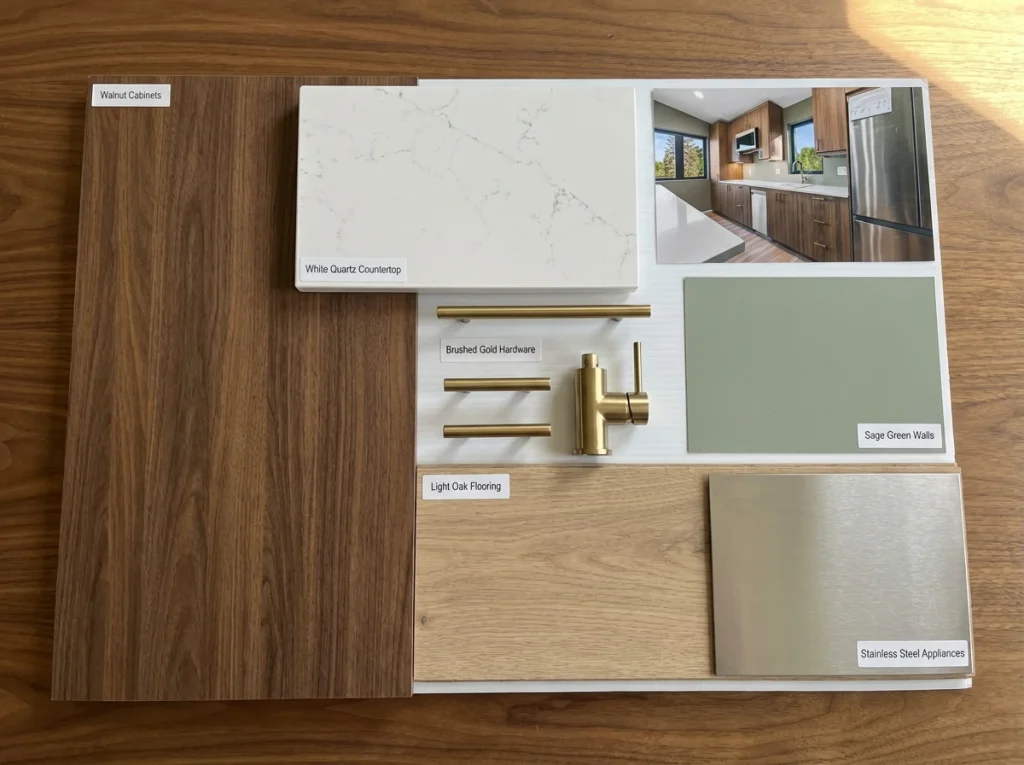
A major remodel is one of the most exciting — and most overwhelming — undertakings a homeowner can face. The secret to keeping your sanity? It begins weeks before demolition day. These seven steps will help you walk into the chaos prepared, protected, and firmly in control.
Table of Contents
Set a Realistic Budget — and Buffer
Before touching a single wall, get crystal clear on your finances. Define the total amount you can spend on the remodel, then subtract 15–20% to set as a contingency reserve. Renovations almost always surface hidden surprises: outdated wiring behind drywall, plumbing that needs upgrading, or structural issues that weren’t visible at the outset.
Break your budget into categories — labor, materials, permits, and furniture — and get at least three contractor quotes before committing. A well-structured budget is the single strongest predictor of a smooth renovation.
Pro tip: Write down your “walk away” number — the absolute maximum you’ll spend. Having it in writing keeps scope creep in check.
Define the Scope of Work Clearly
Ambiguity is the enemy of every remodel. Sit down with your contractor and define, in writing, every element of the project: what rooms are in scope, what stays, what goes, what finishes are expected, and what timeline is agreed upon.
A detailed scope of work protects both you and the contractor. It’s the document you return to whenever questions arise — and they will arise. The more specific it is, the fewer disputes you’ll face midway through the build.
Key question to answer: What does ‘done’ look like? Define the finish line before you start running.
Secure All Permits Before Work Begins
Skipping permits to save time is a gamble that rarely pays off. Unpermitted work can invalidate your homeowner’s insurance, complicate your home sale, and — in worst-case scenarios — require you to tear out completed work for inspection.
Your contractor should handle the permit applications, but verify that all required permits are approved and posted before work begins. Common permits needed include structural, electrical, plumbing, and HVAC modifications.
Do this: Ask your contractor to provide copies of all issued permits before demo day.
Establish a Temporary Living Plan
Depending on the scale of your remodel, your home may be partially or fully uninhabitable during construction. A kitchen remodel means weeks of takeout; a full gut renovation may mean finding alternate accommodations entirely.
Plan your living situation early. If staying on-site, identify which rooms remain livable and set up a functional temporary kitchen and bathroom. If relocating, book accommodations in advance — the good options near you won’t stay available long.
Comfort matters: Set up a comfortable base camp with essentials — coffee maker, microwave, mini fridge — to make the disruption bearable.
Protect and Store Your Belongings
Dust, debris, and foot traffic will reach corners of your home you didn’t expect. Before work begins, remove furniture, art, and valuables from all work zones — and rooms adjacent to them. Construction dust travels remarkably far.
Rent a storage unit for large items, or designate sealed-off rooms as holding zones. Cover ventilation registers with filters and seal doorways with plastic sheeting to contain dust migration throughout the house.
Don’t forget: Document and photograph all valuables before storing them. It’s smart practice for insurance purposes.
Prepare for the Unexpected
Even with the best planning, remodels surface surprises. Lead paint in older homes, asbestos insulation, mold behind tile, or structural anomalies are common discoveries that can halt work and inflate costs.
Before demolition, consider a pre-renovation inspection to identify known hazards. Make sure your contract includes clear language on how change orders are handled — what triggers one, how quickly you’ll be notified, and how the cost is calculated.
Mindset shift: Treat surprises as information, not failures. The contractor who surfaces problems early is doing their job well.
Communicate a Schedule with Your Contractor
Agree on a project schedule in writing before work begins, including start date, key milestones, and projected completion. Build in scheduled weekly check-ins — brief, consistent touchpoints keep small misalignments from becoming big problems.
Designate a single point of contact on your end for day-to-day decisions. A clear communication channel prevents confusion, speeds up approvals, and keeps the project moving. Renovations stall most often not from labor shortages, but from delayed decisions.
Best practice: Keep a shared running document or group chat with your contractor for decisions, photos, and approvals — it creates a paper trail and saves everyone time.
Ready to Break Ground?
A well-prepared home makes for a faster, safer, and more satisfying renovation.
Contact us on: 720-968-7874 and and we’ll set your project — up for success from day one.