
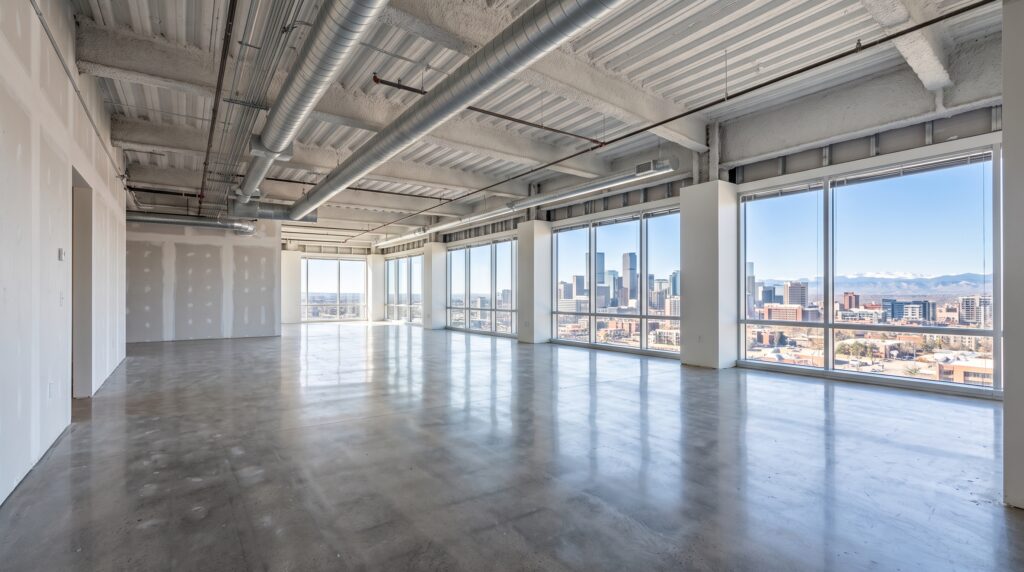
A tenant improvement project sits between two parties who want different things. The landlord wants the space leased and the work done to a standard that protects the building. The tenant wants the space open, on budget, and built for how they actually operate.
The contractor’s job is to deliver both. That is easier when everyone understands how tenant improvement work in Denver actually runs.
This guide covers the basics: what counts as a TI project, how the money usually works, what permits to expect, and where projects tend to slip.
What counts as a tenant improvement in Denver
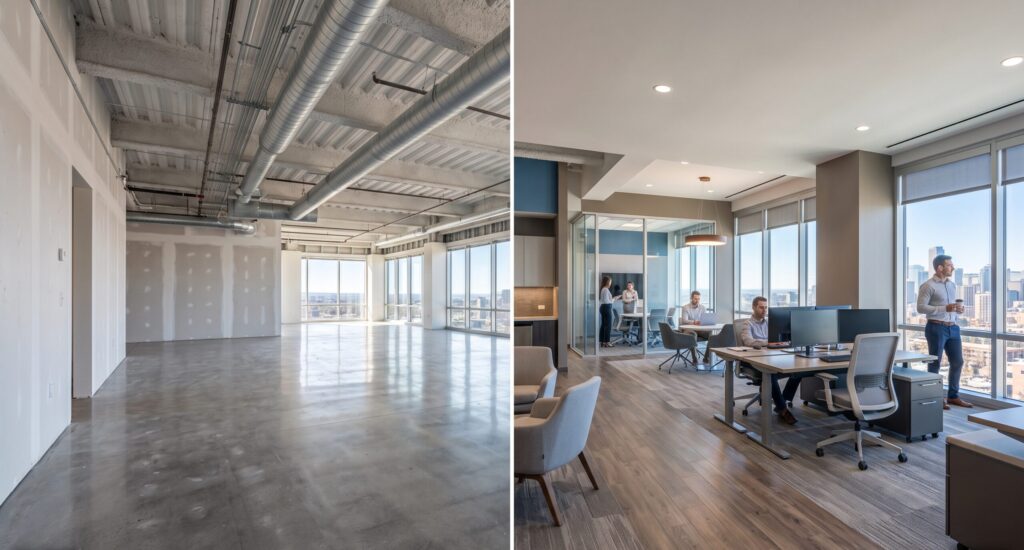
Tenant improvement, or TI, is any construction that adapts an existing commercial space for a specific tenant. That can be as light as new paint, flooring, and lighting, or as involved as moving walls, adding restrooms, upgrading electrical and HVAC, and building out a full interior.
Common Denver TI projects include:
- Office suites being reconfigured for a new tenant
- Retail spaces being fitted out for a specific brand
- Medical and dental suites with specialized plumbing and electrical
- Restaurant and café interiors
- Multifamily common areas, leasing offices, and unit refreshes
What TI is not: ground-up construction or structural additions to the building envelope. Those are different projects with different contractors.
How TI allowances usually work
Most commercial leases include a tenant improvement allowance. The landlord agrees to fund a set amount per square foot toward the buildout, and the tenant covers anything above that.
Three things property managers and business owners should sort out early:
Who controls the work. Some leases have the landlord run the project with their own contractor. Others let the tenant hire the GC and get reimbursed. Know which one you are in, because it changes who the contractor reports to.
What the allowance covers. Allowances often exclude furniture, fixtures, equipment, signage, and design fees. Get clarity before you set a budget.
When the money moves. Reimbursement usually happens after inspections pass and lien waivers are collected. A contractor who understands that process keeps the paperwork moving so the tenant is not floating costs longer than they need to.
Permits: what to expect in Denver
Nearly every TI project that touches walls, electrical, plumbing, or mechanical systems needs a building permit from the City and County of Denver. Depending on the scope and use, the review can also involve fire, zoning, health, and accessibility. Denver’s Commercial and Multifamily Projects page is the starting point for the city’s requirements and application materials.
Two things to plan for:
Plan review takes time. Commercial permits go through review before they are issued. The length depends on scope, completeness of the drawings, and how busy the department is. Build that time into the lease commencement date, not just the construction schedule.
Change of use adds steps. If a space is going from retail to restaurant, or office to medical, the code requirements can change significantly. Flag this early.
A licensed Denver contractor should be able to outline the likely permit path before you sign a contract. If they cannot, that is a warning sign. Our guide on what to look for in a commercial general contractor covers the other questions worth asking before you hire.
Where TI projects lose time
After years of remodeling work in Denver, we see the same delays come up again and again. Most are avoidable.

Incomplete drawings. Permits stall when the plans leave questions unanswered. Investing in complete drawings up front saves weeks later.
Late finish selections. Tile, flooring, lighting, and millwork all have lead times. Selections made after demo starts push the schedule.
Unknown existing conditions. Older Denver buildings hide surprises behind walls and above ceilings. A pre-construction walk with the contractor reduces them.
Unclear decision-makers. When the tenant, the property manager, and the owner all need to approve a change, name one person who gives the final answer.
What a good TI contractor does differently
The right contractor for tenant improvement work is not just a builder. They are a coordinator. They should:
- Hold an active Denver contractor license and pull the permits themselves
- Provide a written scope with clear inclusions and exclusions
- Give you a schedule with real dates and update it when things change
- Manage the trades, inspections, and closeout paperwork
- Communicate in plain language, in writing, on a predictable rhythm
Building While Giving handles commercial TI and interior buildouts as the licensed general contractor on the job. Our background in whole home remodeling across Denver and suburbs like Littleton means we are used to working in occupied buildings, coordinating around people, and keeping the site clean. Giving is part of how we operate too. Every project supports our mission to give back to the community we build in.
Planning a tenant improvement project?
If you manage property or run a business in Denver and have a buildout coming, start the conversation early. The best time to bring in a contractor is before the lease is finalized, when scope and allowance can still be shaped.
Talk to a commercial tenant improvement contractor who runs the job start to finish, or reach us at (720) 968-7874 or info@buildingwhilegiving.com.